From 4K to 25K+ non-branded organic visitors in 4 months at Morgen
How I drove Morgen's non-branded organic traffic from ~4K to 25K+ in 4 months by shipping 4 free tools, ranking on Google and ChatGPT, and converting the first paid user directly from a free tool.
Introduction
Morgen is the calendar-native AI productivity platform trusted by thousands of knowledge workers to plan their week around what actually matters. Joining as Growth lead in December 2025, I shipped 4 free SEO tools in 2 months, relaunched the programmatic SEO engine, and took non-branded organic traffic from ~4K to 25K+ monthly visitors in 4 months.
My focus → product-led growth through free utility tools. The thesis → most people use AI to write SEO articles. I used AI to build SEO tools instead. The result → 6K+ unique visitors landing on free tools in March alone, ChatGPT.com becoming the #3 traffic source, and the first paid user converting directly from a free tool in March 2026.
My Role & Mission
As Growth Lead at Morgen, reporting directly to the founders, my mission was simple → move organic acquisition from a branded, Google-only channel into a product-led, AI-aware growth engine.
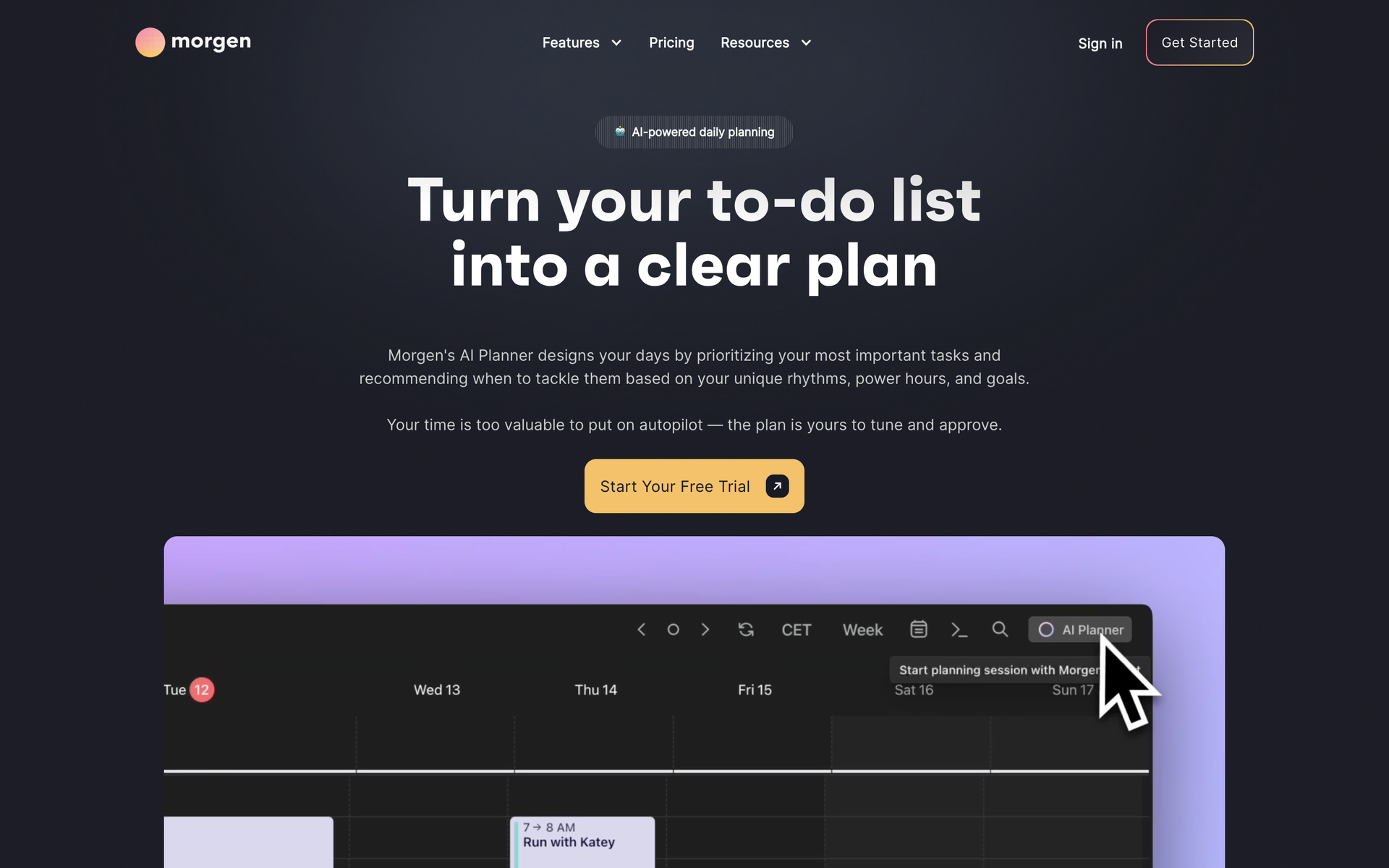
Scope → five parallel workstreams. Acquisition through free tools and SEO. Conversion through a page-level CRO framework and landing-page redesigns. Retention through the referral program. Distribution through an affiliate channel test. Working daily with product, design, and engineering to turn ideas into shipped surfaces, in weeks instead of quarters.
The Strategy: Build Tools, Not Articles
The AI era broke the old SEO playbook. Content farms are cheap. Utility is not. My first bet at Morgen → stop competing on articles, start ranking with tools.
The filter was brutal. 20 tool ideas evaluated against 3 hard questions → Does the search volume exist? Is the competition beatable? Does a tool beat an article for this intent? Only 4 passed.
1. Four Free Tools, Two Months
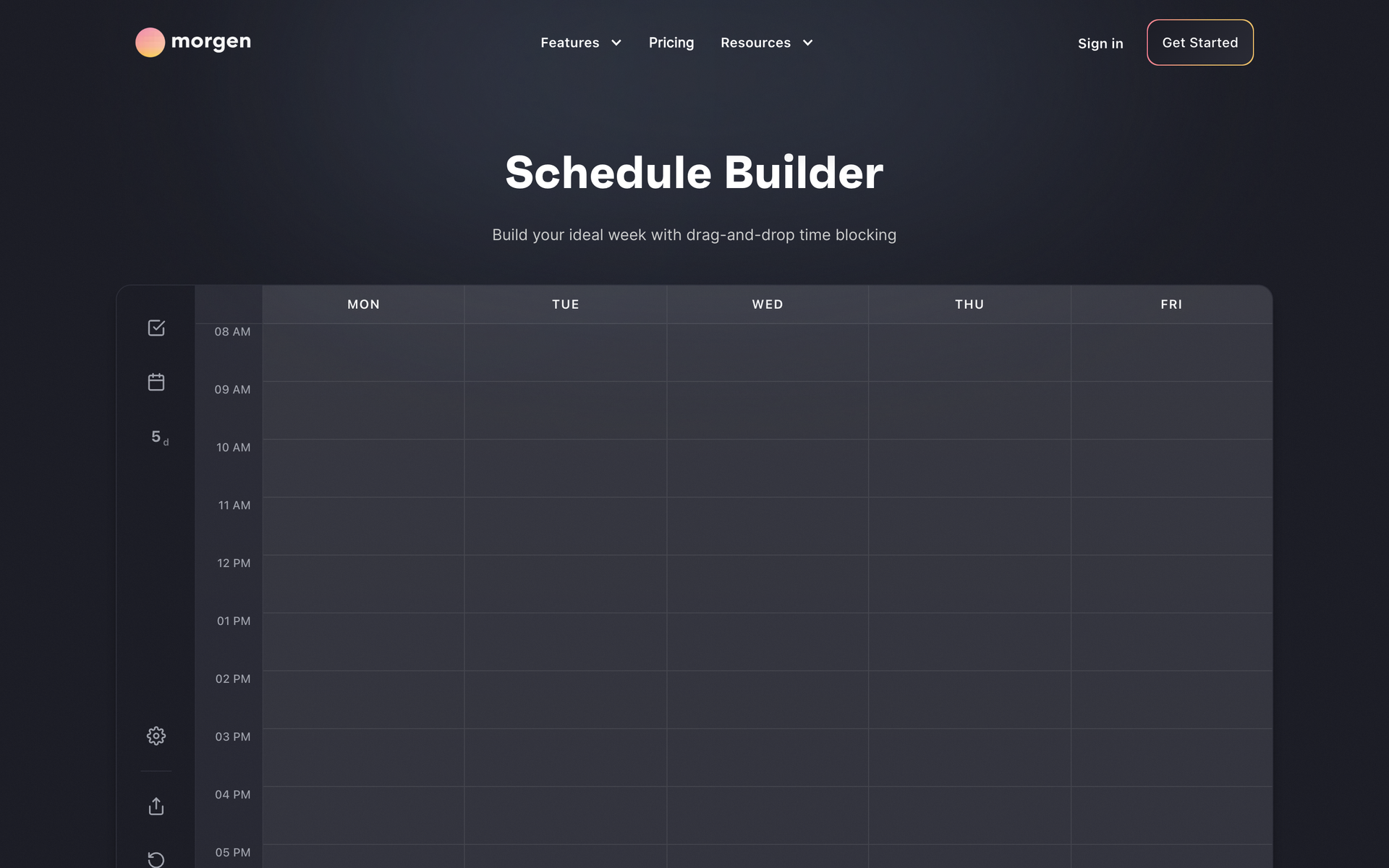
Shipped four free scheduling tools between December 2025 and February 2026, each built with Claude Code on top of the Morgen stack → Timezone Meeting Planner (Dec 28), Schedule Builder (Jan 20), Calendar Link Generator (Feb 8), Scheduling Poll (Feb 26).
Each tool took days, not weeks. I'm not a developer. Every shipped feature was built with Claude Code, reviewed by a real engineer, and instrumented with Plausible and Amplitude the same day.
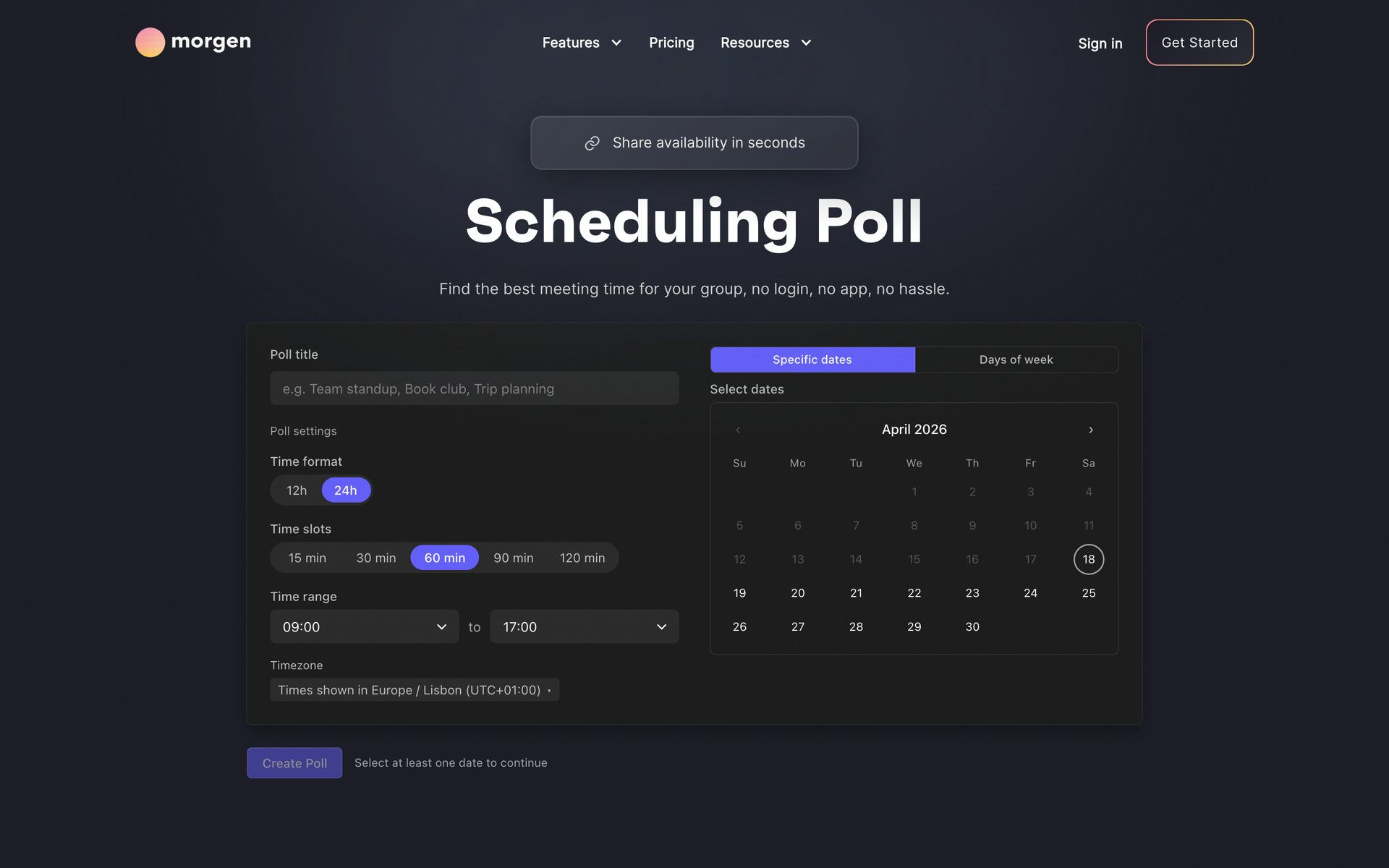
2. The Scheduling Poll → From Zero to 9.9K in 3 Months
The Scheduling Poll was the breakout. A free meeting-poll tool, no login, no account, share-link only. Launched late February. By mid-April → 9.9K unique visitors, 10.7K total visits, 13.7K pageviews. Growth → +124K% year-to-date (starting from zero).
What worked → treating the tool as a real product, not an SEO asset. Fast UX, no friction to create, and a single upsell link back to Morgen's core app once the poll closed. The conversion path → free tool → login → onboarding → subscription. First paying user came from exactly this flow.
Further reading → How I built 4 free tools that rank on Google and drive daily SaaS traffic.
3. The AI Surprise → ChatGPT as a Distribution Channel
The unexpected insight → these tools don't just rank on Google. They get recommended by AI.
ChatGPT.com became Morgen's #3 referral source by April. Not because we optimized for it, but because the free tools answered real user intents directly, and AI assistants quote functional tools over blog posts.
Takeaway → in the AI era, utility is the distribution moat. The tools that get recommended by Claude, ChatGPT, and Perplexity are the ones that actually do the job.
4. The CRO Framework → From Traffic to Revenue
Free tools bring traffic. Traffic without a conversion floor is wasted spend. So in parallel, I built Morgen's first page-level CRO framework → one unified 90-day baseline across the full marketing funnel, a priority matrix ranking every public page by revenue potential, and 6-week measurement sprints shipping one clear change per page.
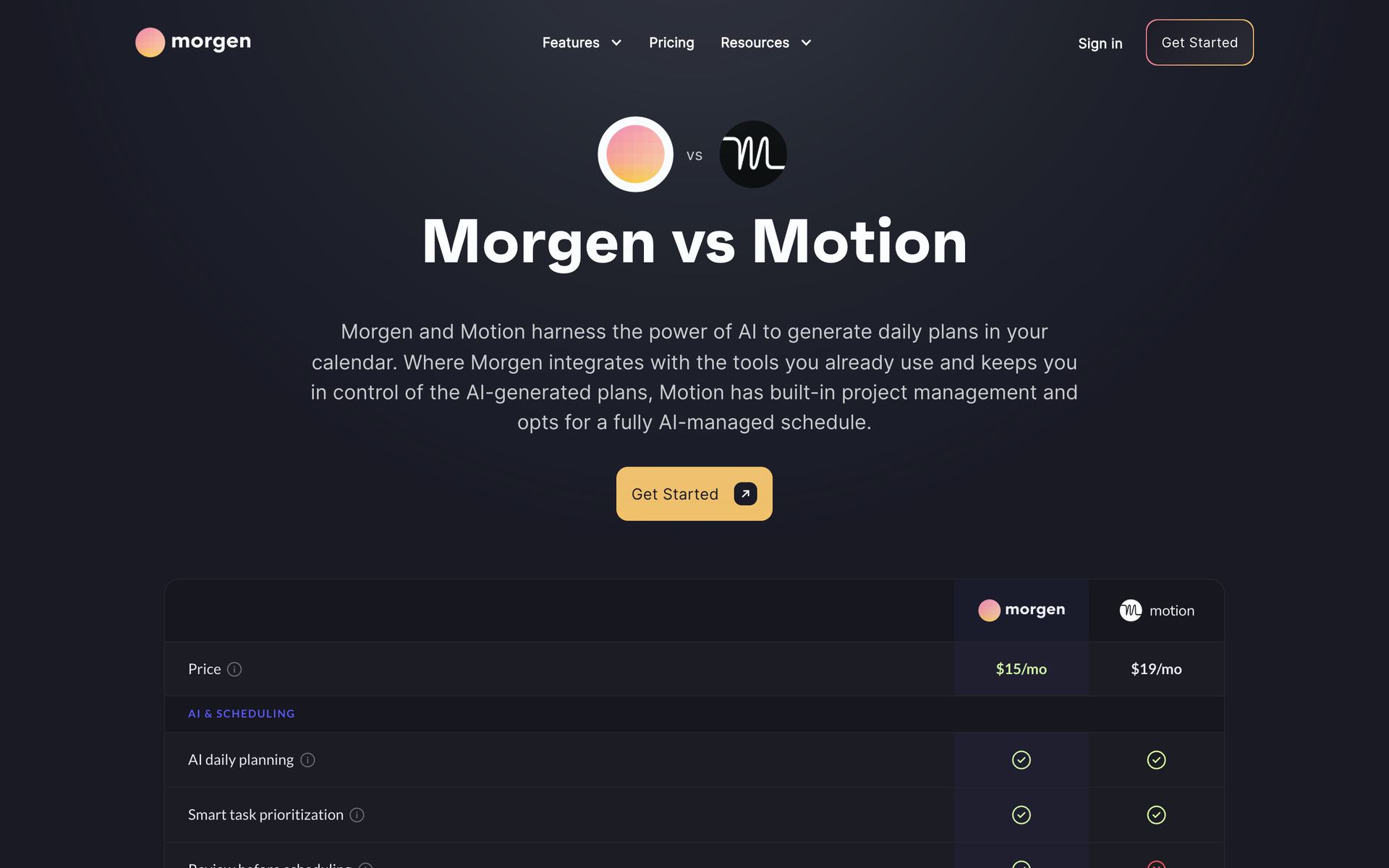
The restructure I led on the pricing page is the clearest example → pricing had been buried at position 7 of 11 under hero, trust bar, demo, differentiators, integrations, and social proof. The new layout pulls pricing to position 1, adds a comparison table, and lifts the exit-intent onto the trial CTA. Same logic applied to the competitive comparison pages (Morgen vs Akiflow, vs Motion, vs Sunsama) → feature-by-feature tables, pricing transparency, review ratings, contextual CTAs.
The thesis → optimize for incremental subscriptions, not vanity sign-ups. Ship one page at a time so the causality is clean.
5. The Referral Program → Personalization Across Marketing + App
Morgen's referral program needed to feel like a personal invitation, not a banner ad. I architected a cookie-based personalization layer that bridges the marketing site and the app.
How it works → the marketing site reads a ?ref= param, validates it against the Identity Service, and personalizes the landing experience ("Lambert invited you — unlock your $25 reward") via banner and popup. A shared cookie on .morgen.so carries the referral code across to the app, so signup flow picks it up automatically. Rewards are tiered ($25 / $30 / $35) and redeemed through Tremendous.
Built with Webflow components, a small JS detection layer, and backend integration with the existing Identity Service. Ships as infrastructure the growth team can keep iterating on.
6. The Affiliate Campaign → A Deliberate, Honest Failure
Not every bet wins. In Q1 2026 I ran a time-limited commission bump (15% → 25% on new paying users) for two months, backed by a refreshed asset bundle (demo videos, comparison docs, one-pagers) sent to 2,000+ affiliates + 8 VIP partners.
The math was conservative → breakeven needed only a 9% revenue uplift. The result → the campaign didn't hit it. Early data showed a 35% email open rate but low downstream traffic on the asset hub, and monthly conversions didn't shift materially during the campaign window.
What I take away → commission-only incentives don't scale without sustained relationship work. The cap on an affiliate channel is the relevance of your assets and the trust with your partners, not the percentage. The honest framing → this was a two-month, bounded-downside test that returned a strategic learning rather than revenue. Both outcomes were on the table at the start.
Overall Impact & Key Learnings
Between December 2025 and April 2026 → non-branded organic traffic grew from ~4K to 25K+ monthly visitors. Four free tools live. First paid user converted from a free tool. ChatGPT.com established as the #3 traffic source. The CRO framework live across 5 priority pages. The referral program shipped. The affiliate campaign closed with a clean learning. A growth engine that compounds, with multiple levers running in parallel.
- The filter is the hard part. The building is fast now. AI collapses build time to days. Taste and judgment about what to build is the only scarce resource.
- Utility beats content. A functional tool generates traffic, trust, and product signal in one move. Articles only generate traffic.
- Build for humans AND for AI. Once a tool ranks, AI assistants start recommending it. That's a second, compounding distribution channel → free, durable, and growing fast.
- Run bets with bounded downside. The affiliate campaign failed, and that's fine. A two-month test with capped payout cost returned a clearer read on the channel than a year of quarterly meetings about it.
 Webflow
 Amplitude
 Plausible
 Retool
 Claude
 Cursor
 Intercom
 Ahrefs
 Slack
Slack Gather